2026 Best Electric Milk Frother for Wholesale Buyers?

Time:2026-09-18 Author:Sophia
0%

For wholesale buyers, choosing the best Electric Milk Frother in 2026 requires more than comparing prices. A reliable model should produce consistent foam during repeated service, not only perform well in a showroom test. Cafés, hotels, offices, and hospitality distributors need equipment that handles daily demand with predictable results.

This guide examines key purchasing factors, including motor performance, heating control, noise levels, cleaning access, materials, packaging, warranty support, and minimum order quantities. A stainless-steel whisk, cool-touch housing, and removable parts may improve practical value. However, attractive specifications can hide weak supplier support or inconsistent batch quality. Request samples before placing a large order.

Small details matter. A frother that takes 90 seconds per cup can slow a busy counter. A difficult lid can frustrate staff. Excessive vibration may also affect customer experience. Wholesale buyers should review product certifications, factory records, inspection procedures, and delivery history. Independent testing is useful, but no single test reveals everything.

Some recommendations may change as battery systems, smart controls, and energy standards develop. That uncertainty deserves attention. A lower-cost model might suit promotional bundles, while a stronger machine may better support long-term commercial use. This article offers a practical framework for comparing suppliers and products honestly. It also recognizes an important limitation: the “best” Electric Milk Frother depends on order volume, target market, service expectations, and available budget.
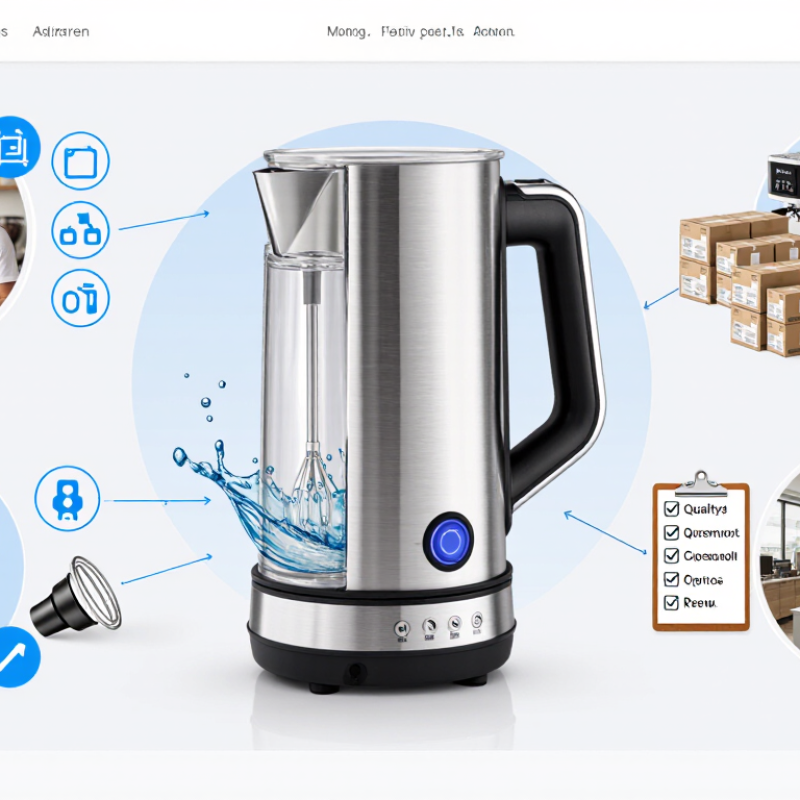
2026 Best Electric Milk Frother for Wholesale Buyers?

What Is an Electric Milk Frother and How Does It Work?

An electric milk frother is a countertop appliance that heats milk and creates foam. It usually contains a stainless-steel jug, a small whisk, and an electric motor. Some models heat through a concealed plate under the jug. Others use induction heating for faster and more even temperature control.

When switched on, the whisk spins rapidly around a central spindle. This movement pulls air into the milk and breaks it into small bubbles. At the same time, a heating element raises the milk temperature.

Many units stop automatically near 60–65°C, where milk tastes pleasantly warm without excessive scorching. Cold-froth settings operate the whisk without activating the heater.

The foam depends on milk type, fat content, filling level, and whisk speed. Small details matter.

Wholesale buyers should test real samples before placing large orders. Check whether the jug heats evenly, the motor sounds stable, and the lid prevents splashing. Measure foam volume after one cycle.

Inspect the handle, power cord, coating, and seal after repeated cleaning. Dishwasher claims need verification, because some internal parts still require hand washing.

I have found that a quiet motor is useful, but it does not guarantee dense foam. That assumption can be misleading. A unit may look polished yet produce thin bubbles with low-fat milk.

Ask for temperature controls, safety shutoff details, food-contact material information, packaging tests, and replacement-part support. These checks reveal more than appearance.

Which Features Matter Most for Wholesale Buyers in 2026?

Wholesale buyers in 2026 should judge milk frothers by repeatable performance, not attractive specifications. The National Coffee Association reported that 66% of American adults drank coffee daily in 2025. That supports continued demand for convenient home and workplace beverage tools. However, demand alone does not guarantee fast stock movement.

The most important features are consistent foam, short heating time, quiet operation, and simple cleaning. A detachable whisk or washable stainless-steel cup can reduce service complaints. Temperature control also matters. Overheated milk creates poor texture and damages user trust. Industry market reports estimate steady growth in electric frother demand, but their forecasts vary widely. Buyers should treat optimistic numbers carefully. I would test at least 30 units from one production batch. Check foam volume, motor noise, battery endurance, and performance after repeated washing. A perfect sample proves little.

Tips: Request third-party safety test records, food-contact material documentation, and a clear warranty. Compare landed cost, not factory price. Inspect cartons for corner protection and readable instructions. Ask for spare whisks. Small parts disappear quickly in retail use. Consider a two-speed model only when both speeds produce useful results. Extra settings can confuse customers and increase returns. Review energy use, charging time, and packaging waste before placing a large order. A lower-priced unit may become expensive when returns and replacements are included.

How to Compare Frothing Performance, Capacity, and Durability

For wholesale buyers, frothing performance should be measured, not guessed from attractive specifications. Test each electric milk frother with chilled milk at 4°C and record foam volume after 20 seconds. A useful unit should create fine, stable bubbles rather than large, quickly collapsing foam. Check temperature consistency too. Overheated milk can produce flat foam and an unpleasant cooked taste.

Capacity matters when cafés serve repeated orders. Compare the minimum and maximum fill lines, not only the advertised volume. A 350-milliliter working capacity may suit small portions, while larger operations need fewer refill cycles. Run several batches without long pauses. Watch for slower spinning, uneven foam, or automatic shutoff delays. One test can mislead. Milk type, temperature, and cleaning habits change the result.

Durability requires a realistic inspection. Examine the whisk attachment, lid seal, handle, power cord, and inner coating for weak points. Ask suppliers for cycle-test records, replacement-part availability, and warranty terms in writing. A stainless-steel whisk may handle frequent use, but it does not guarantee reliable electronics. For wholesale purchasing, test at least three units from different production batches. Record noise, heating time, cleaning effort, and performance after repeated cycles. The less glamorous details often affect operating costs most.

2026 Best Electric Milk Frother for Wholesale Buyers?

How to Compare Frothing Performance, Capacity, and Durability

Scores are normalized from 0 to 100 for wholesale screening. Frothing performance combines heating speed, foam consistency, and temperature stability; capacity reflects usable milk volume for standard batches; durability readiness reflects rated operating cycles, motor load tolerance, and ease of cleaning. Higher scores indicate stronger purchasing potential for repeated commercial or household resale use.

What Safety, Compliance, and Maintenance Standards Should Buyers Check?

2026 Best Electric Milk Frother for Wholesale Buyers?

Wholesale buyers should verify safety before comparing foam quality or unit price. Request test reports against IEC 60335-1 and IEC 60335-2-15, covering electrical safety and liquid-heating appliances. Check insulation, grounding, leakage current, overheating protection, and automatic shutoff. A visible thermal fuse matters when a busy café forgets a device.

Food-contact parts need documented material compliance, not vague “food-grade” claims. Ask for migration test results under FDA 21 CFR requirements, EU Regulation 1935/2004, or the destination market’s equivalent rules. The 2022 FDA Food Code stresses cleanable surfaces, temperature control, and contamination prevention. Smooth stainless interiors and removable whisks help workers clean dried milk from seams. Small gaps become trouble.

Maintenance evidence should include cleaning instructions, replacement-part availability, and batch traceability. WHO estimates that contaminated food causes about 600 million illnesses worldwide each year, with 420,000 deaths annually. A frother is not the only cause, but poor cleaning can add risk. Require pilot testing with real milk, repeated heating cycles, and hard-water exposure. Review failure rates by production lot. Do not trust one sample.

A perfect checklist is impossible. Still, buyers should document every exception before placing a large order. Inspectors may question missing records, unclear symbols, or inconsistent manuals. Suppliers should provide calibrated test records, factory quality controls, and corrective-action history. That paperwork often reveals more than polished product photographs.

How to Choose the Best Supplier, Pricing Model, and Order Quantity

2026 Best Electric Milk Frother for Wholesale Buyers?

Wholesale demand should guide the product choice. The International Coffee Organization reported global coffee consumption of about 177.9 million 60-kilogram bags in 2023/24. That scale supports steady demand for home coffee accessories, but demand does not guarantee fast sales. Choose a supplier with documented factory experience, stable heating performance, and traceable food-contact materials. Request three samples from different production batches. Test foam density, noise, cleaning time, and heat consistency. Small details matter.
Pricing needs more than a factory quotation. Compare the product price, packaging, inspection fees, freight, duties, and defect allowance. A supplier offering a lower unit price may create higher landed costs through weak packaging or inconsistent components. The U.S. Department of Energy notes that standby power can affect appliance efficiency, so ask suppliers for measured standby consumption and test records. Treat certificates as evidence, not decoration. Verify issuing laboratories and report dates.
Order quantity should match your sales evidence. Start with a pilot order, even when the unit price looks less attractive. Ask for price tiers at 100, 500, and 1,000 units, then calculate inventory risk. A spreadsheet can still lie. Include spare lids, whisks, and replacement units in the negotiation. Supplier payment terms also deserve attention; a 30% deposit may strain cash flow before products sell. I would rather accept a slightly higher price than hide quality problems inside a large MOQ. It is not always the cheapest path.

FAQS

Which features matter most when buying electric milk frothers wholesale in 2026?

Prioritize consistent foam, short heating time, quiet operation, and simple cleaning. Attractive specifications can mislead. Test real performance instead.

How should buyers test product quality before placing a large order?

Test at least 30 units from one production batch. Check foam volume, motor noise, heating consistency, battery endurance, and repeated washing performance.

Why does temperature control matter in a milk frother?

Overheated milk produces poor texture and may damage customer trust. Check whether the device heats evenly without scorching the milk.

Are detachable parts useful for wholesale buyers?

Yes. Detachable whisks and washable stainless-steel cups can reduce cleaning complaints. Spare whisks are worth requesting because small parts disappear quickly.

How should wholesale buyers compare supplier prices?

Compare landed cost, not factory price alone. Include packaging, freight, duties, inspections, defects, replacements, and possible customer returns.

What documents should buyers request from suppliers?

Request third-party safety records, food-contact material documents, warranty terms, and energy-use data. Verify laboratory names and report dates. Certificates are not magic.

How many units should a buyer order initially?

Match the order quantity to proven sales evidence. A pilot order reduces inventory risk, even when the unit price is slightly higher.

Is a two-speed model better for wholesale distribution?

Only choose two speeds when both settings produce useful results. Extra settings may confuse customers and increase returns. More buttons are not always better.

What packaging details deserve attention before shipment?

Inspect cartons for corner protection, clear instructions, and damage resistance. Weak packaging can turn a cheap product into an expensive problem.

Which payment and replacement terms should buyers negotiate?

Discuss deposit levels, spare lids, whisks, replacement units, and warranty handling. A 30% deposit may strain cash flow before sales begin. My judgment may still miss hidden costs.

Conclusion

Choosing the best Electric Milk Frother for wholesale buyers in 2026 requires more than comparing retail prices. An electric frother uses controlled heating, spinning, or whisking to create hot or cold foam with consistent texture. Buyers should evaluate frothing speed, foam quality, temperature control, noise level, batch capacity, energy efficiency, and ease of cleaning. Models designed for wholesale distribution should also offer durable materials, reliable motors, replaceable components, and packaging that supports safe transportation.

Before placing an order, buyers should confirm electrical safety certifications, food-contact material compliance, warranty terms, user instructions, and maintenance requirements for the target market. Supplier evaluation should include production capacity, quality-control procedures, sample testing, lead times, communication, and after-sales support. A clear pricing model should account for unit cost, customization, packaging, shipping, and potential volume discounts. Selecting an order quantity based on demand forecasts, storage capacity, and cash flow can help reduce inventory risk while securing competitive wholesale pricing.


Sophia

Sophia

Sophia is a dedicated marketing professional with an exceptional depth of knowledge about her company's products and services. With a keen understanding of market trends and customer needs, she crafts insightful blog posts that not only inform but also engage readers, enriching the company’s online......