Running a smoothie business requires more than attractive recipes and fresh ingredients. The right equipment must support speed, consistency, hygiene, and steady customer demand.
A commercial Smoothie Blender should handle frozen fruit, leafy greens, ice, and thick mixtures without overheating. It should create a smooth texture during busy breakfast and lunch periods. These details affect serving time, product quality, and customer satisfaction. Small differences matter.
This guide examines the practical factors behind a reliable business purchase. It considers motor performance, jar capacity, blade design, noise, cleaning time, durability, and warranty support. Real service conditions matter more than impressive claims on a product page. A blender that performs beautifully at home may struggle after dozens of orders. Staff feedback is valuable. Maintenance should also fit your daily routine, not add another complicated task.
Recommendations should come from practical testing, manufacturer specifications, and dependable user experience. Checking electrical requirements, safety features, and service availability can prevent expensive surprises. Independent reviews help, but they may not match every shop’s menu or workload. In practice, a powerful motor does not guarantee the best drink texture. Some buying assumptions fail. A lower-priced model may become costly if repairs interrupt service. A premium model may be unnecessary for a small café with a limited menu. The aim is to match performance with actual business needs. By comparing these factors carefully, owners can choose a Smoothie Blender that supports consistent results and dependable daily operation.
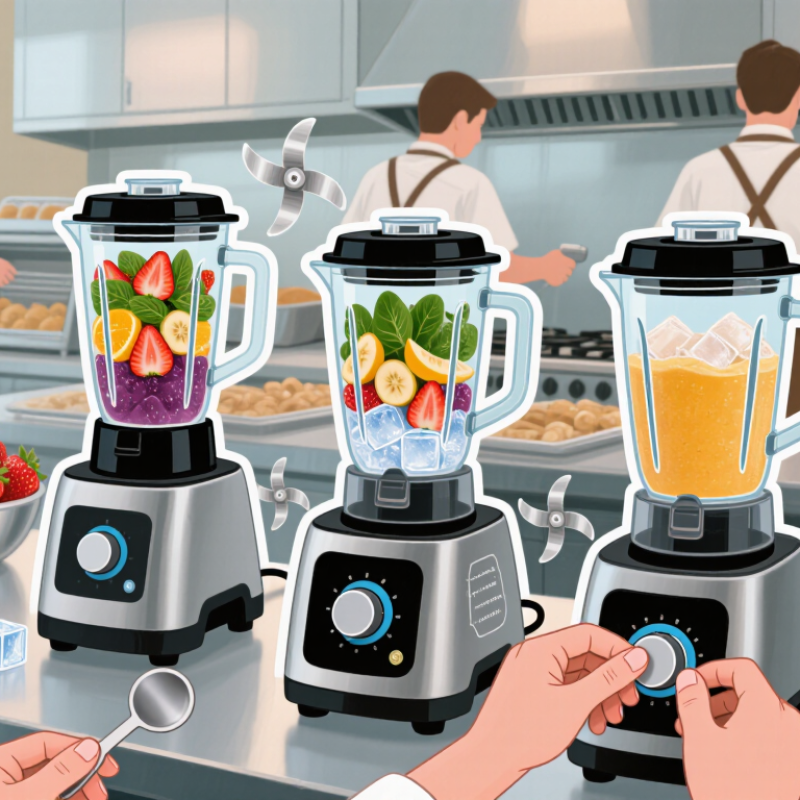
A commercial smoothie blender should match your workflow, not just its advertised power. The National Restaurant Association’s 2024 report projected U.S. restaurant sales above $1 trillion. That scale increases pressure on speed, consistency, and equipment uptime. Grand View Research estimated the global smoothies market at approximately $6.8 billion in 2022, with continued growth expected through 2030. More demand can expose weak preparation systems quickly.
Start by measuring your real service pattern. Record the busiest 30-minute period, average cup size, and daily number of blends. A small café may need a compact unit for 20 drinks per hour. A busy juice counter may require repeated blending without long cooling pauses. Test frozen fruit, leafy greens, ice, and thick nut-based mixtures. Watch for stalled blades, uneven texture, and overheating. Noise matters too. A loud machine can make a small counter uncomfortable.
Choose controls that new staff can learn quickly. Check whether the container pours cleanly and fits beneath your workspace. Review cleaning time, replacement-part access, electrical requirements, and warranty terms. Independent laboratory certification can support safer food-contact decisions, but it does not guarantee perfect performance. I would not rely on wattage alone; published power figures rarely describe blending results under load. Run timed trials with your own recipes. The best choice may be less powerful, but easier to maintain during a crowded service.
A commercial smoothie blender must match your daily workload, not just its advertised power. For a small café, a high-speed countertop model may handle 30 to 50 drinks each morning. A heavier-duty model suits continuous service, frozen fruit, and thick nut mixtures. I once focused on motor wattage and ignored jar shape. That mistake caused unmixed spinach near the lid. Blender types matter.
Power is useful only when the blade design, cooling system, and drive assembly can sustain it. Look for a commercial rating and a motor that does not overheat during repeated cycles. For frozen drinks, 1,000 to 1,500 watts may be practical, but ingredients change the demand.
A 2-liter container supports batch preparation, while a 1-liter jar gives better control for single orders. Leave headspace for expansion and splashing. Capacity is not free efficiency. A large jar may waste ingredients during slow periods.
Variable speed controls help staff start gently, then increase speed as the mixture thickens. Preset programs can improve consistency, especially when several employees share one station. Not always. A smoothie with frozen berries may need a pause and a scrape, even on a strong machine. Choose controls that remain easy to clean and operate with dry hands. Test noise, lid fit, and pouring comfort before purchase. These details affect service more than a glossy specification sheet.
Choosing a commercial smoothie blender requires more than checking motor power. The National Restaurant Association’s 2024 industry report projected U.S. restaurant sales above $1 trillion, increasing pressure on speed and consistency. A durable blender should survive repeated ice, frozen fruit, and liquid cycles without overheating. Ask for thermal protection, replaceable wear parts, and a serviceable drive system. NSF/ANSI 8 also provides a useful reference for commercial food-equipment safety and sanitation.
Workflow efficiency appears during the rush. In a real test, time twenty identical drinks from ingredient loading to cup placement. Record blending time, lid removal, rinsing, and reset time. A five-second delay seems minor, but it becomes more than eight minutes across one hundred orders. That calculation is simple, yet easy to overlook. Choose controls that staff can operate with wet hands and limited training. Keep the pitcher near the preparation zone.
Noise deserves measurement, not guesswork. NIOSH recommends limiting occupational exposure to 85 dBA over an eight-hour workday. Measure sound at one meter during an ice-heavy cycle, then compare it with the surrounding conversation level. Excessive noise may slow communication and increase staff fatigue. I would also test the blender beside the service counter, not only in an empty showroom. That result may be less flattering. Still, honest testing reveals whether durability and speed are worth the noise.
In a busy café, cleaning speed matters as much as blending power. Choose a blender with removable, dishwasher-safe parts and smooth surfaces without hidden corners. After each rush, staff should rinse the jar immediately, then wash the lid, gasket, and blade area carefully. Dried fruit residue becomes surprisingly difficult to remove. A clear cleaning procedure also supports better hygiene records and consistent staff training.
Safety features deserve close attention. Look for a secure lid, overload protection, stable feet, and controls that prevent accidental starting. Noise reduction can also protect staff comfort during long shifts. Check the warranty length, covered components, and repair process before purchasing. A useful supplier should provide clear service contacts, replacement parts, and realistic response times. A long warranty means little if repairs require complicated shipping. It is easy to overlook this detail.
Tips: Test the blender with ice, frozen fruit, and a thick mixture. Ask staff to clean it after a simulated rush. Check whether they can remove every part without tools. Record cleaning time and noise level. Do not judge performance from one smooth blend. Real workloads are messier. Also, leave space around the motor for ventilation. I would not assume the most powerful model is automatically the best choice; power can increase noise, energy use, and maintenance demands.
Choosing a smoothie blender for business starts with your growth plan, not the loudest motor.
In a busy service test, a blender that handled ten drinks quickly still struggled when the jar overheated. Speed is not everything. Check blending consistency, cooling time, noise, and cleaning effort during a realistic shift. A blender that leaves fruit chunks can increase waste and slow every order.
For a small café, a mid-range commercial blender may protect cash flow. Choose one with a durable container, replaceable parts, and simple controls. Avoid paying for capacity you will not use. A larger jar sounds efficient, but it may waste ingredients during quiet hours. Record your average daily orders, peak-hour volume, and available counter space before deciding.
Growing businesses need flexibility. If you expect catering, delivery, or a second location, leave room in the budget for extra containers and service costs. Ask whether the motor can manage repeated batches without long pauses. Review the warranty terms carefully, especially coverage for heavy commercial use. I once focused too heavily on power and underestimated cleaning time. That mistake affected staff morale more than expected. A short cleaning delay can become an expensive bottleneck. Choose the model that fits today’s workload while allowing a measured increase in demand.
It should manage ice, frozen fruit, thick mixtures, and repeated liquid cycles without overheating.
Time twenty identical drinks from ingredient loading to cup placement.
Choose simple controls that staff can operate with wet hands and limited training.
Measure sound one meter away during an ice-heavy cycle.
Excessive noise can slow communication and increase fatigue during long shifts.
Select removable, dishwasher-safe parts with smooth surfaces and few hidden corners.
Look for a secure lid, overload protection, stable feet, and accidental-start prevention.
Confirm the warranty length, covered components, repair process, and replacement-parts availability.
Not always.
Choosing the best Smoothie Blender for a business starts with understanding daily operational needs, including expected order volume, ingredient types, available counter space, and staff workflow. Compare suitable blender types by motor power, jar capacity, blending speed controls, and consistency. A high-performance model may be ideal for busy locations, while a compact option could better suit smaller operations. Durability, noise levels, and ease of use are also important because reliable equipment can support faster service and a more comfortable work environment.
Before making a final decision, evaluate cleaning requirements, safety features, warranty coverage, and access to technical support or replacement parts. The blender should be simple to maintain and safe for regular commercial use. Finally, compare the total cost with your current budget and future growth plans. Selecting equipment that balances performance, efficiency, reliability, and long-term value can help a business serve customers consistently while avoiding unnecessary upgrades.